REG Reviews – December 2025
Last month, UK Government proposed cyber resilience bill, insurers led tech workforce employment, insurers focused on turning climate risk into profit and Reeves’ budget outlines impact on insurance industry…
As the insurance industry moves through a period of rapid change, long-standing models and frameworks are being tested by new technologies, evolving customer expectations and emerging global risks. These shifts are reshaping how insurers operate, compete, and deliver value, making it essential for leaders to stay ahead of what’s coming next. With 2026 on the horizon, understanding the pressures building across the market can help insurers make smarter decisions, strengthen resilience, and position themselves for sustained success.
As we enter the final quarter of the year, it's a good moment to reflect on recent developments and prepare for what lies ahead. Regulatory technology (RegTech) continues to prove invaluable when helping firms navigate an extremely complex regulatory environment. Moving forward into 2026, RegTech is evolving beyond automation, and towards intelligent, strategic solutions that embed compliance into day-to-day operations.
From Consumer Duty requirements to ESG disclosures and cross-border data regulations, insurers and financial services firms face growing pressure to manage compliance efficiently, proactively, and transparently.
Last month, Which? issued a super complaint against poor insurance practices, the FCA introduced new rules to tackle non-financial misconduct, a talent crisis surfaced amongst the insurance industry and ESG claims came under the spotlight...
Read these articles and many more as we bring you all the important news and views in the insurance and financial services world…
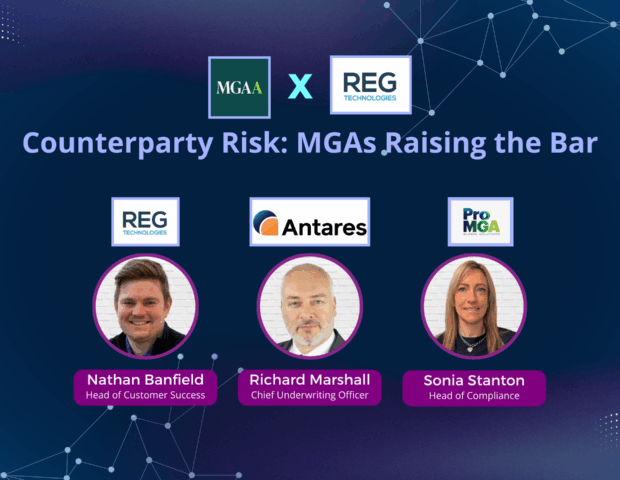
Managing General Agents (MGAs) play a pivotal role in the distribution chain, serving as a crucial bridge between insurers, reinsurers, carriers, brokers and the market as a whole. Their specialism and innovativeness position them as vital pioneers in the insurance market and enable them to underwrite risk that can't be easily covered by a traditional insurance firm.
Anti-money laundering (AML) efforts have been pivotal in the global fight against financial crime. Historically, AML practices have depended heavily on manual reviews and rule based monitoring systems. These traditional methods are accurate but often inconvenient and slow, struggling to keep up with the sophisticated techniques used by modern financial criminals. Moreover, they are prone to human error and can lead to significant operational bottlenecks, making it challenging to effectively manage the vast amounts of data that financial institutions handle daily.
Join us as we interview industry leaders, uncover key trends, and deliver actionable insights that empower you to drive the insurance and financial services sector forward. On July 3rd, REG Technologies attended the MGAA Annual Conference as a Silver Sponsor of the MGAA. As part of the day we spent time talking to key players in the MGA and insurance sphere about the impact of technology on the future of insurance success and the meaning of navigating a bright future to insurance leaders.
Last month, the UK Reform party speculated that it would eradicate the FCA and enable insurers to self-regulate if elected, the UK government planned to trial digital driving licences amid privacy backlash, extreme weather caused significant insurance risks and costs for clean energy development, and REG hosted its Business Profile and Smart Search Webinar to help businesses enhance partner discovery.
Read these articles and many more as we bring you all the important news and views in the insurance and financial services world…
Conducting Politically Exposed Persons Checks is an important process for firms that work in the insurance and financial services sectors, particularly with the pressure they face by regulators such as the FCA. PEPs screening is also crucial for reducing the risks linked to money laundering, corruption, and other forms of financial misconduct.
The insurance sector is undergoing unprecedented transformations in working models, driven by rapid technological advancements, shifting employee expectations and the impact of the COVID-19 pandemic, giving rise to the growing adoption of hybrid and remote work settings.
Choose a time to suit you and meet one of our experts
Book a demo with us